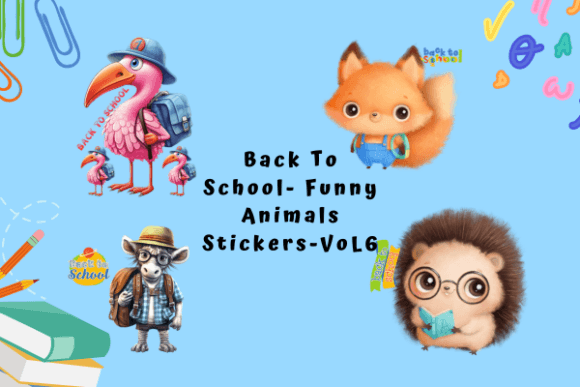
Back to School Cute Animal Stickers VOL6
Back to School Cute Animal Stickers VOL6 isn’t just another sticker pack—it’s a thoughtfully curated set of 32 high-resolution, playful animal illustrations designed to spark joy and intention in everyday school routines. Each sticker features bold outlines, cheerful expressions, and gentle color palettes that balance vibrancy with visual calm—think wide-eyed foxes holding pencils, owls perched on open notebooks, hedgehogs wearing tiny backpacks, and raccoons balancing stacked books. The style sits comfortably between hand-drawn charm and clean digital polish: expressive enough to feel personal, precise enough to scale well across surfaces without losing detail.
These aren’t clipart relics or generic vector animals. They’re character-driven, with subtle storytelling cues—like a bunny tucking an apple behind its ear or a sloth gently hugging a calculator—that invite interaction rather than passive decoration. That nuance matters when you're designing for kids aged 5–12: it supports emotional connection, encourages narrative play, and quietly reinforces positive associations with learning tools.
Where These Stickers Add Real Value Across Projects
Because each sticker is delivered as a transparent-background PNG at 10 × 10 cm (300 DPI), Back to School Cute Animal Stickers VOL6 works seamlessly across both physical and digital contexts. For crafters and small business owners, they’re ideal for customizing reusable lunchboxes, laminated flashcards, or classroom reward charts—no bleed or alignment issues, thanks to consistent sizing and crisp edges. Designers building back-to-school social media kits use them as layered elements in Canva templates or Figma design systems, pairing them with sans serif body text to keep focus on the message while adding warmth through illustration.
Publishers creating early-reader workbooks or teacher resource PDFs integrate these stickers as visual anchors beside comprehension questions or vocabulary prompts—leveraging their friendly familiarity to reduce cognitive load for young readers. Bloggers and educators use them to break up long-form posts about study habits or classroom organization, turning abstract advice into something tactile and memorable. Even marketers running seasonal email campaigns find that swapping out stock icons for one of these stickers—say, a panda holding a “First Day Checklist”—increases open rates by making subject lines feel more human and less transactional.
Designing With Intention: Readability, Hierarchy, and Tone
Stickers like these don’t function in isolation—they’re part of a larger visual ecosystem. Their strength lies in contrast: soft shapes against structured layouts, whimsy next to clarity. When applied to a notebook cover, for example, a single centered sticker creates immediate focal weight—no need for oversized headlines or decorative borders. On a water bottle, repetition of three smaller stickers (a turtle, a frog, and a parrot) forms a rhythm that guides the eye naturally around the curve, supporting spatial awareness in product photography.
That same rhythm translates digitally. In editorial design, placing a sticker near a pull quote or sidebar gives visual breathing room while reinforcing theme—e.g., a squirrel storing acorns beside a “Tips for Organizing Your Desk” section. It’s not decoration for decoration’s sake; it’s strategic reinforcement of tone and topic. And because all 32 stickers share consistent line weight, proportion, and palette logic, they hold together even when mixed—no jarring shifts in scale or rendering quality that undermine professionalism.
Practical Integration Tips You’ll Actually Use
Before dropping Back to School Cute Animal Stickers VOL6 into your next project, ask two quiet but critical questions: What action do I want this to support? and What feeling should someone have when they see it? If you’re designing a parent newsletter, a sticker of a sleepy owl yawning beside “Rest Well Tonight” lands differently than a hyperactive monkey swinging from a “Let’s Crush This Week!” banner. Match energy to intent.
Test scaling early. While the 10 × 10 cm size works beautifully on A4 printouts or tablet screens, shrink them below 3 cm and some finer details—like the stitching on a backpack or freckles on a fox’s nose—start to blur. For mobile-first assets, stick to the largest 8–10 stickers in the set, or simplify layering by using only outline versions (if provided) for smaller UI elements.
Licensing is straightforward: commercial use is included, meaning you can apply these to client deliverables, sell printed sticker sheets, or embed them in digital products you monetize—no attribution required. But remember: consistency builds recognition. Using just three core characters across a full back-to-school campaign (e.g., the owl for planning, the fox for focus, the hedgehog for resilience) creates subtle continuity that audiences absorb over time—even if they never name the animals.
Pairing Without Overcomplicating
You don’t need elaborate font pairings to make these stickers shine—but thoughtful ones help. Pair them with a warm, open sans serif like Inter or Manrope for digital interfaces where legibility trumps flair. For printed handouts or packaging, try a gentle geometric sans like Clash Grotesk or a low-contrast serif like Freight Text to ground the playfulness in quiet authority. Avoid overly tight tracking or condensed weights—they fight the stickers’ generous spacing and relaxed posture.
If you’re layering text directly onto a sticker (e.g., labeling a folder with “Math” inside a chalkboard-style raccoon), keep copy under five words and place it along natural negative space—not over eyes, paws, or tails. Let the animal breathe. That restraint is what separates effective branding from visual clutter.
Back to School Cute Animal Stickers VOL6 earns its place not by being everywhere, but by being *right* where it’s needed: on the edge of a child’s attention, in the margin of a busy planner, or tucked into the corner of a reassuring email. It’s design that listens first—and answers with kindness, clarity, and just the right amount of mischief.