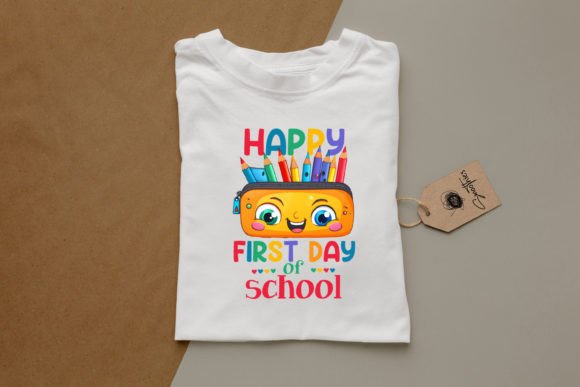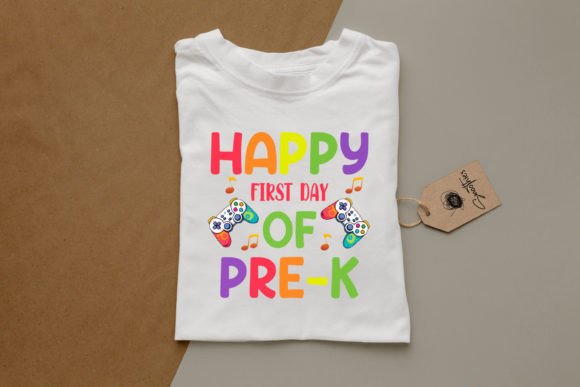
Back to School Happy First Day of Pre K
That first day of Pre-K is more than a milestone—it’s a quiet, heartfelt moment parents and educators hold close. A tiny backpack, nervous fingers clutching a new lunchbox, a shy wave at the classroom door—these are the scenes that spark warm, nostalgic joy. “Back to School Happy First Day of Pre K” designs capture that tenderness with gentle typography, soft colors, and thoughtful charm. They’re not just graphics; they’re emotional touchpoints for teachers printing welcome signs, parents crafting memory books, or small business owners designing keepsake mugs and framed wall art.
What You’re Really Getting (and What You’re Not)
The product you’re considering includes a high-resolution PNG file: 4000×4000 pixels, 300 dpi, with a transparent background. That means crisp scaling for large prints—like 16×20 wall art—or sharp detail on sublimated tumblers and pillow covers. It’s ideal for print-on-demand shops, classroom bulletin boards, or personalized birthday cards celebrating a child’s very first school experience.
But here’s where many buyers pause—and rightly so. This is not a layered PSD or editable vector file. There are no SVG cutting files included, so if you plan to use it with a Cricut or Silhouette for vinyl decals or iron-on transfers, you’ll need to trace or convert it yourself (or hire a designer). Also, while the transparency supports clean layering in design software like Canva or Photoshop, it won’t auto-cut on craft machines without additional prep.
A Common Misstep: Assuming Print-Ready Means *All*-Ready
One frequent oversight? Assuming “300 dpi” guarantees perfect results across every medium. In reality, color fidelity shifts between screens and printers—and especially with sublimation. A soft coral on your monitor might appear muted or slightly peach-toned on a ceramic mug after heat transfer. Similarly, water-based inks on fabric can soften edges or lighten pastel tones.
We’ve seen educators order this design for a class welcome banner, only to find the printed version lacked contrast against their light-colored bulletin board. The issue wasn’t the file quality—it was skipping a quick test print on the same paper stock and printer they’d use for final output. That small step would’ve revealed whether subtle shadows or bolder outlines were needed.
What to Check Before You Download or Buy
Before completing your purchase, ask yourself three practical questions:
- What’s my end use? If you're making t-shirts via direct-to-garment (DTG) printing, the transparent PNG works beautifully. For screen printing? You may need simplified color separations—something this file doesn’t provide.
- Do I have the right software? Basic tools like Canva handle PNGs well—but if you need to adjust individual letters or recolor elements, you’ll hit limits. Vector editing (Illustrator, Affinity Designer) isn’t possible without source files.
- Is my printer calibrated? Especially for sublimation or photo-quality prints, calibrating your monitor and printer profile prevents unpleasant surprises. Try printing a small 5×7 swatch first—not just on plain paper, but on your intended substrate (e.g., coated sublimation paper or cotton blend fabric).
Better Approaches for Real-World Use
Instead of hoping the file adapts perfectly to every project, build flexibility into your workflow. For example:
- For classroom posters: Open the PNG in PowerPoint or Google Slides, add a subtle drop shadow or white stroke around the text to boost readability against busy backgrounds.
- For mugs or tumblers: Import the file into your sublimation software at 100% scale, then check the “bleed area” setting. Many systems add automatic margins—so zoom in and confirm the design fully reaches the printable zone.
- For scrapbooks or greeting cards: Layer the PNG over textured paper backgrounds in design apps. Lower its opacity slightly (to ~95%) to let subtle grain show through—adds warmth without losing clarity.
Why Transparency Matters—And When It Doesn’t
The transparent background is one of this design’s biggest strengths: it lets you place “Back to School Happy First Day of Pre K” cleanly over photos, patterns, or gradients. But transparency also means zero built-in shadow or glow effects. If you’re using it for digital invitations or social media posts, adding a soft outer glow in Canva or Photoshop helps the text “pop” against variable backgrounds—especially on mobile feeds where contrast drops.
Also worth noting: some online print services automatically add a white background unless you explicitly select “transparent” in their upload settings. Always double-check that option before submitting your order—even with a flawless PNG.
Realistic Expectations for Color & Consistency
Yes, colors may vary between devices and printers. That’s physics—not poor file quality. An sRGB monitor displays differently than a CMYK press or a sublimation oven. Instead of treating variation as a flaw, treat it as a cue to test early. One educator we spoke with ordered five sample mugs from her supplier—each with a different color adjustment (slight saturation boost, cooler white point)—then chose the version that best matched her classroom’s cozy, earthy palette.
That kind of intentional testing takes 10 minutes and saves hours of reordering or disappointed customers.
Final Thought: Design Is a Starting Point, Not the Finish Line
“Back to School Happy First Day of Pre K” is a meaningful, versatile asset—but its impact grows when paired with thoughtful execution. Whether you’re a teacher personalizing a welcome display, a parent assembling a first-day memory box, or an entrepreneur launching a boutique back-to-school collection, your attention to detail matters more than the file alone. Choose wisely, test intentionally, adapt gently, and always keep the feeling behind the words front and center: warmth, pride, and quiet celebration.