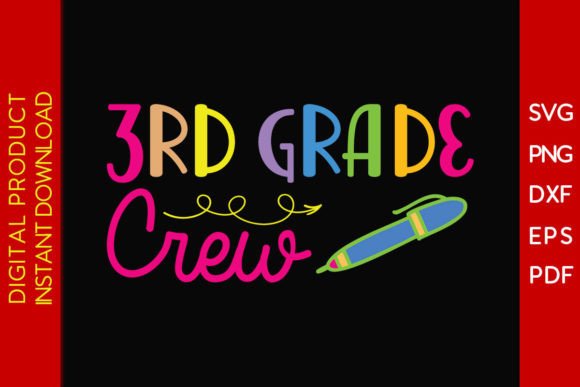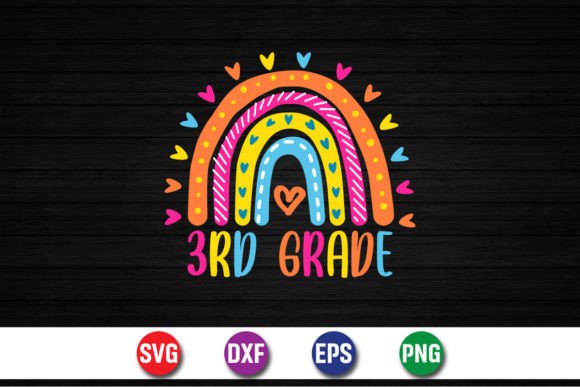
3rd Grade SVG Design Back to School
3rd Grade SVG Design Back to School is a digital design file package intended for use with electronic cutting machines—such as Cricut, Silhouette, or Brother ScanNCut—in crafting personalized apparel and classroom materials. It includes vector-based artwork themed around third-grade readiness: school supplies, friendly characters, academic icons (like pencils, apples, and open books), and encouraging phrases such as “Hello and Welcome to My T-Shirt Design Store.” The files are optimized for crafters who need scalable, editable, and production-ready assets.
Who Might Find This Design Useful?
This collection suits educators preparing classroom welcome materials, parents personalizing back-to-school clothing, small business owners building a t-shirt design store, or hobbyists exploring beginner-friendly vector projects. Its appeal lies in the combination of age-appropriate visual themes and technical flexibility—not just aesthetic relevance, but functional adaptability across tools and workflows.
Key Features and Their Practical Implications
The item description highlights several technical attributes worth evaluating against your specific needs:
- Possible and easy color change: All elements are layered and grouped logically in vector format, allowing users to select and recolor individual shapes without raster distortion. This is especially helpful when matching school colors or customizing for multiple students.
- 100% vector shapes, fully resizable: Unlike bitmap images, these designs retain crisp edges at any scale—ideal for cutting vinyl at 2 inches or printing large-format posters. Resizing does not degrade quality, provided editing is done in vector-compatible software.
- Ready to print: The included PNG version offers immediate use for simple print-and-cut tasks or digital sharing. However, this raster version lacks editability and scalability beyond its native resolution.
- 100 color changeable: This phrasing refers to the number of distinct, selectable color regions—not a limit on palette options. Each shape can be assigned any color independently, supporting high customization without manual path separation.
- Source files included (AI 10, EPS 10, SVG, DXF, PNG): Multiple formats increase compatibility across platforms. Adobe Illustrator (AI) and EPS files preserve layers and effects for advanced editing. SVG works natively in most web-based design interfaces. DXF supports CAD and some industrial cutters. PNG serves preview and basic print needs.
Benefits for Real-World Use
For educators, the design streamlines creation of consistent, professional-looking welcome signage, name tags, or bulletin board accents—all aligned to third-grade developmental themes. For craft entrepreneurs, it reduces time spent designing from scratch while maintaining brand flexibility through color and layout adjustments. The inclusion of AI and EPS sources means experienced users can modify typography, spacing, or composition without starting over. SVG and DXF files integrate directly into cutting machine software, minimizing conversion steps and potential errors.
Tradeoffs and Considerations
While the package emphasizes ease of use, some limitations follow from its purpose and structure. First, the design is pre-composed: it reflects a specific stylistic interpretation of “third grade”—friendly, clean, and illustrative—but may not suit more minimalist, modern, or culturally specific aesthetics. Second, although labeled “100 vector shapes,” complexity varies; overlapping paths or embedded clipping masks could require familiarity with vector editing to adjust confidently. Third, the PNG version, while convenient, cannot be scaled for large-format printing without visible pixelation—so reliance on it alone limits output quality.
Also note that “ready to print” applies only after user configuration: alignment, bleed settings, and material-specific cut settings still require manual review. No file automatically compensates for vinyl thickness, blade depth, or printer calibration. Success depends partly on the user’s familiarity with their equipment and software workflow.
When This Design Is a Strong Fit
This package is well-suited when you need a cohesive, age-themed design system quickly—and already own or plan to use vector-capable software or a compatible cutting machine. It fits scenarios where consistency matters (e.g., a set of matching t-shirts for a third-grade orientation event) and where minor customization (color swaps, size adjustments, or text edits) meets project goals. If your workflow includes Illustrator, Inkscape, Silhouette Studio, or Cricut Design Space, the included formats align efficiently with those environments.
When Alternatives May Be Worth Considering
Consider other options if your goal is highly unique illustration—such as custom portraits, school mascot integration, or bilingual text layouts. Pre-made SVG bundles like 3rd Grade SVG Design Back to School offer speed and reliability but less originality than commissioning bespoke artwork. Similarly, if your primary tool is a non-vector platform (e.g., Canva or basic photo editors), the AI/EPS files won’t be usable without conversion—and SVG support there may be partial or unstable.
Another consideration is licensing scope. The description does not specify commercial usage rights. If you intend to sell finished products (e.g., printed t-shirts) using this design, verify whether redistribution or derivative commercial use is permitted under the license terms—many SVG marketplaces restrict resale of unmodified designs or require extended licenses for business applications.
Making an Informed Decision
To determine whether 3rd Grade SVG Design Back to School matches your needs, ask three questions:
- What is my primary output method? If you cut vinyl or heat-transfer material regularly, SVG and DXF support is valuable. If you mostly print PDFs or use embroidery machines, EPS or AI may matter more—or the package may be less relevant.
- How much customization do I expect to do? If changing colors and resizing suffices, this package delivers efficiently. If you anticipate reworking outlines, adding gradients, or integrating photos, ensure you have access to and proficiency with vector editing tools.
- What is my audience or context? Third-grade themes assume a particular tone and visual language. Confirm that the imagery resonates with your intended recipients—especially in diverse or inclusive educational settings where representation and neutrality matter.
Finally, compare file contents before purchase: check whether layers are named clearly, if text is outlined (preventing font dependency), and whether grouping supports intuitive selection. These details affect long-term usability more than format count alone.