Back to School Designs Welcome Back SVG
Back to School Designs Welcome Back SVG files are production-ready digital assets built for real-world use—not just decoration. They’re part of a broader workflow where timing, precision, and compatibility matter more than visual novelty alone. Whether you're designing classroom signage, launching a seasonal marketing campaign, or preparing print-on-demand merchandise, these files serve as functional building blocks—not afterthoughts.
What You’re Actually Getting—and Why It Matters
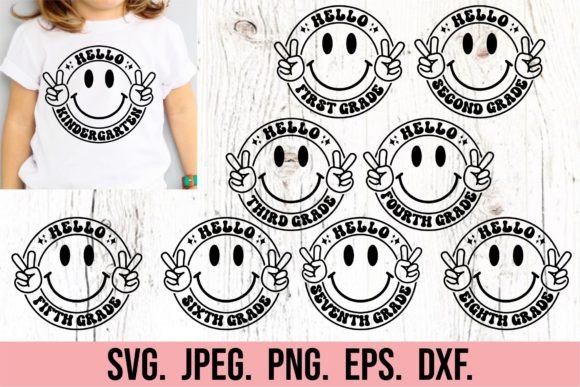
The package includes AI, EPS, PNG, SVG, and DXF formats—all delivered at 4500–5400 pixels and 300 DPI. That resolution isn’t arbitrary. It ensures crisp output across multiple physical sizes: from A4 handouts and vinyl decals to large-format banners or embroidered patches. The file types cover distinct technical needs—AI and EPS for vector editing in Adobe Illustrator, SVG for web embedding or Cricut/Silhouette cutting software, PNG for quick drag-and-drop use in Canva or PowerPoint, and DXF for CNC or laser-cutting workflows.
Crucially, the files open without error in standard software versions used by professionals and hobbyists alike. No conversion steps, no missing fonts, no embedded links to external assets. This eliminates friction early in your process—especially when deadlines loom or team members have varying software access.
How It Fits Into Your Real Workflows
You don’t wait until the first day of school to start using Back to School Designs Welcome Back SVG. Integration begins earlier—in planning, preparation, and cross-platform coordination.
- Before launch: Use the SVG or AI file to mock up signage layouts in Illustrator or Figma, test color palettes against your brand guidelines, or preview how the design scales on different substrates (e.g., matte paper vs. glossy vinyl). Because the vector is clean and layered, you can isolate elements—swap text, adjust spacing, or recolor individual components without raster degradation.
- During execution: Import the DXF into Glowforge or LightBurn for precise cutting, or load the SVG directly into Cricut Design Space to cut iron-on transfers for student welcome kits. The PNG version drops cleanly into email newsletters or LMS dashboards without requiring image optimization plugins or resizing scripts.
- After deployment: Archive the original AI file with your project assets. Its editable nature means you can repurpose it next year—swap dates, update grade levels, or adapt it for “Welcome Back After Winter Break” with minimal effort. Consistency across academic years reinforces institutional identity without reinventing the wheel.
Compatibility Is Built-In—Not Added Later
These files were created with interoperability in mind. The EPS retains legacy compatibility with older versions of CorelDRAW or InDesign. The SVG follows W3C standards, so it renders reliably in modern browsers and CMS platforms like WordPress or Squarespace. Even the PNG includes transparent backgrounds—no manual clipping needed before placing over photos or gradients.
No third-party fonts are embedded or required. All text has been converted to outlines, eliminating licensing issues or substitution errors. That’s critical if you’re sharing files with printers, contractors, or school district IT departments who may not have access to your font library.
Educators & Administrators
Print the SVG at full size on cardstock for hallway banners, then export a smaller PNG version for your school’s social media calendar. Because the file supports 300 DPI, you won’t need separate low-res and high-res versions—you scale once and export as needed. Store the AI file in your shared Google Drive folder labeled “School Year Assets” so staff can access it without requesting permission each time.
Small Business Owners & Print Shops
Load the DXF into your cutting machine software and run a test pass on scrap material before committing to bulk production. The consistent line weights and closed paths reduce mis-cuts. If customers request customization—like adding a school mascot—the AI file lets you insert new vector art without distorting proportions or alignment.
Freelancers & Marketers
Use the layered AI structure to build variants quickly: one version with serif headings for formal announcements, another with bold sans-serif for social graphics. Save each as a separate .ai file—but keep the original intact for future edits. When delivering to clients, include the SVG and PNG alongside usage notes (“This SVG works in Mailchimp templates; PNG is optimized for Instagram Stories”).
Organizing for Long-Term Use
Treat these files like reusable tools—not disposable downloads. Create a naming convention that reflects purpose and date: back-to-school-welcome-svg-2024-edu. Store them in a dedicated subfolder inside your master “Design Assets” directory, alongside related resources like brand color swatches or typography guides. Add a README.txt with brief notes on compatible software versions and known limitations (e.g., “DXF does not include gradient fills—use AI version for those”)
This level of organization pays off when you revisit the asset six months later. You’ll know exactly which file to reach for—and why—without trial and error or digging through download history.
Quality Control Starts With the Source
The 4500–5400 pixel dimensions and 300 DPI output aren’t just specs—they’re quality control checkpoints. At that resolution, fine details like subtle shadows, thin dividers, or small iconography remain legible even when printed at 24x36 inches. That means fewer rounds of proofing, fewer reprints due to blurriness, and less time spent troubleshooting with vendors.
It also means the files pass internal QA checks before they leave your system. If you’re using automated preflight tools like FlightCheck or Enfocus PitStop, these files trigger fewer warnings because fonts are outlined, images are embedded, and color profiles are assigned correctly (CMYK for print, RGB for digital).
Efficiency Gains You Can Measure
Consider this: manually recreating a polished welcome design from scratch—including layout, typography, spacing, and export optimization—takes most designers 2–4 hours. With Back to School Designs Welcome Back SVG, that same task reduces to under 30 minutes: import, customize, export, deploy. That reclaimed time compounds across projects—whether you’re managing three classrooms or ten retail locations.
More importantly, it shifts your focus from recreation to refinement. Instead of rebuilding the foundation, you’re adjusting messaging, testing placement, or analyzing engagement metrics. That’s where real impact happens—not in the initial file setup, but in how thoughtfully you apply it.
Consistency Without Compromise
School districts, tutoring centers, and education-focused brands rely on visual continuity to build trust. Using the same underlying design system across flyers, emails, posters, and apparel creates coherence—even when different people handle each channel. Back to School Designs Welcome Back SVG supports that by offering identical geometry and proportion across all formats. A shape that’s perfectly centered in the AI file stays centered in the SVG and DXF—no guesswork, no recalibration.
That consistency extends beyond aesthetics. It applies to accessibility too: the clean vector paths and high contrast ratios meet basic WCAG guidelines for readability, reducing the need for post-hoc adjustments when publishing digitally.
Final Thought: Think Asset, Not Decoration
Back to School Designs Welcome Back SVG isn’t a decorative flourish—it’s an operational asset. It belongs in your toolkit alongside style guides, content calendars, and vendor contact lists. Its value multiplies when treated as infrastructure: organized, documented, tested, and reused deliberately. When your next back-to-school season arrives, you won’t be starting from zero. You’ll be iterating—from a known, reliable foundation.