Welcome Back to School PNG Sublimation: What It Is and When It Fits Your Project
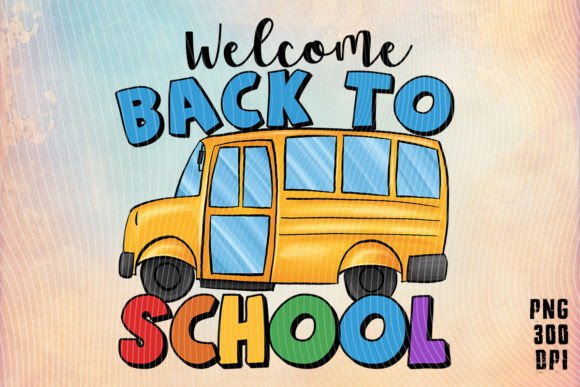
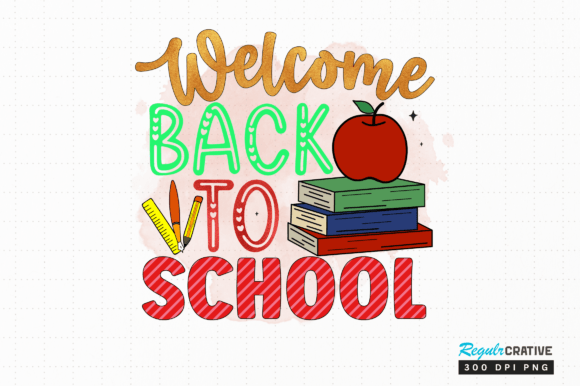
Welcome Back to School PNG Sublimation refers to high-resolution, transparent-background digital artwork—specifically designed for heat-transfer applications like sublimation printing on apparel, mugs, tumblers, notebooks, and other polyester-coated or polymer-based substrates. Unlike standard school-themed clipart, these files are optimized for durability, scalability, and color fidelity in thermal transfer workflows. The “PNG” format ensures crisp edges and clean layering; the “300 DPI resolution” supports sharp output at common print sizes; and the transparent background allows seamless integration onto colored or patterned surfaces without visible borders or white halos.
How It Differs From Other School-Themed Digital Assets
Not all back-to-school graphics serve the same purpose—or perform equally well across platforms. Welcome Back to School PNG Sublimation stands apart from alternatives in three key ways: technical readiness, intended use, and workflow compatibility.
Standard school-themed PNGs sold for general design (e.g., scrapbooking or social media) often lack the color profiles, bleed margins, or resolution needed for sublimation. They may be 72 DPI, include embedded backgrounds, or use RGB values that shift unpredictably when transferred under heat and pressure. In contrast, a properly prepared Welcome Back to School PNG Sublimation file is pre-optimized: it uses sRGB color space (the industry standard for sublimation), avoids anti-aliasing artifacts that blur during transfer, and maintains vector-like clarity even when scaled to fit a full t-shirt front.
Compared to SVG or EPS files, PNG sublimation designs trade editability for reliability. You can’t easily recolor individual elements in a flattened PNG—but you also avoid font-missing errors, rendering inconsistencies across software, or unexpected transparency stacking that sometimes occurs with layered vector imports. For users prioritizing consistent, one-click output over granular customization, this tradeoff is practical—not limiting.
Real-World Use Cases and Practical Fit
The value of Welcome Back to School PNG Sublimation becomes clearest when matched to concrete projects. It excels where speed, consistency, and substrate versatility matter more than infinite variation.
- T-shirt and apparel lines: A teacher-run PTA group preparing custom shirts for orientation day can import the PNG directly into their sublimation software, resize it to fit standard chest or back placements, and run dozens of identical transfers without adjusting layers or re-exporting.
- Classroom or library signage: A school librarian designing laminated welcome banners for hallway displays benefits from the transparent background—allowing text or patterns behind the graphic to show through cleanly, without manual masking.
- Personalized gifts: Parents creating first-day-of-school mugs or tote bags appreciate that the file requires no design expertise—no need to remove backgrounds in Photoshop or troubleshoot clipping paths.
It’s less ideal for projects requiring frequent color swaps across multiple items (e.g., matching team uniforms with different accent colors) or for designers who routinely adapt base graphics into new compositions. In those cases, layered PSD files or vector source files offer more flexibility—though they demand greater technical familiarity and time investment.
What the Delivery Includes—and What It Doesn’t
A typical Welcome Back to School PNG Sublimation package delivers exactly what’s stated: one ZIP file containing a single PNG image at 300 DPI with full transparency support. There are no watermarks, no usage restrictions beyond standard commercial licenses (which permit physical product creation, not resale of the digital file itself), and no hidden dependencies.
However, it’s important to recognize realistic boundaries. Because monitors vary in color calibration, the on-screen appearance may differ slightly from the final printed result—especially on substrates with warm or cool undertones. This isn’t a flaw in the file, but a known variable in sublimation workflows. Users working on brand-critical projects (e.g., district-wide merchandise) should test prints on their specific printer, ink, and substrate before large batches.
Also, while the file is production-ready, it doesn’t include layout templates, mockups, or instructions for specific printers (Epson, Sawgrass, etc.). Those resources are helpful—but separate. If you’re new to sublimation, pairing this asset with beginner-friendly guides or printer-specific presets adds confidence without requiring the graphic itself to carry that burden.
Comparing Alternatives: When to Choose Something Else
Welcome Back to School PNG Sublimation isn’t the only path forward—and shouldn’t be treated as a universal replacement for other tools or formats. Here’s how to weigh options based on your situation:
- You need editable colors or scalable outlines: Consider vector-based school-themed illustrations (SVG/EPS) instead. These let you adjust individual elements, recolor on demand, or scale infinitely without pixelation—valuable for branding consistency across web, print, and merchandise.
- You’re designing for non-sublimation methods: For screen printing, vinyl cutting, or embroidery, PNG sublimation files aren’t optimized. Screen-print versions require spot-color separations; vinyl needs clean cut-lines and simplified paths; embroidery demands stitch files (.dst, .pes). Using a sublimation PNG here introduces unnecessary conversion steps and potential quality loss.
- You want thematic variety—not just one motif: Some collections bundle multiple coordinated designs (e.g., apples, pencils, backpacks, graduation caps) in one pack. A single Welcome Back to School PNG Sublimation offers focus and polish—but less range. Evaluate whether cohesion or diversity better serves your goal.
Decision Factors: Matching Format to Purpose
Ask yourself these questions before selecting Welcome Back to School PNG Sublimation—or passing it over:
- What’s my primary output method? If you’re using a sublimation printer and producing physical goods (apparel, drinkware, notebooks), this format aligns tightly with your toolchain.
- How much time do I have to prepare each file? If batch production is part of your workflow, minimizing prepress steps matters. PNG sublimation cuts out background removal, DPI adjustment, and color-space conversion.
- Do I need to maintain visual consistency across many items? Because the file is fixed in composition and color balance, it guarantees uniformity—unlike editable assets that risk small variations between users or sessions.
- Is technical support or troubleshooting part of my capacity? PNG sublimation files rarely cause software conflicts. If you’ve had issues with fonts missing in EPS files or rendering bugs in complex SVGs, this format reduces friction.
None of these points make Welcome Back to School PNG Sublimation “better” in absolute terms—only more appropriate in certain contexts. Its strength lies in narrowing variables, not expanding possibilities.
Final Considerations for Informed Selection
As with any digital asset, long-term usability depends on how well the file integrates into your existing process—not just its standalone quality. Review your printer model, preferred design software (Cricut Design Space, Silhouette Studio, Adobe Illustrator, or dedicated sublimation suites), and typical project scale. If you regularly produce 5–10 custom items per week and rely on repeatable results, Welcome Back to School PNG Sublimation simplifies execution without sacrificing quality. If your work involves frequent client revisions, multi-color variants, or mixed-output requirements (sublimation + vinyl + embroidery), a broader toolkit—including layered sources and format-specific exports—will likely serve you better over time.
There’s no universal “best” format—only the best fit for your current goals, tools, and constraints. Understanding what Welcome Back to School PNG Sublimation delivers—and where its boundaries lie—helps you choose deliberately, not by default.